
Call (843) 278-6142 and we'll walk you through what's happening in your home before we ever step foot on your property.
That musty smell you keep noticing isn't going away on its own. Neither are the dark spots creeping across your bathroom ceiling or the soft, damp feeling under your crawl space insulation. Every week you wait, the mold colony gets bigger, and the cost to fix it gets higher. Our IICRC-certified crew removes mold from Charleston homes and businesses the right way, from the first inspection to the final clearance check, so you stop breathing it in and start breathing easier.
What's Actually Involved in Professional Mold Removal
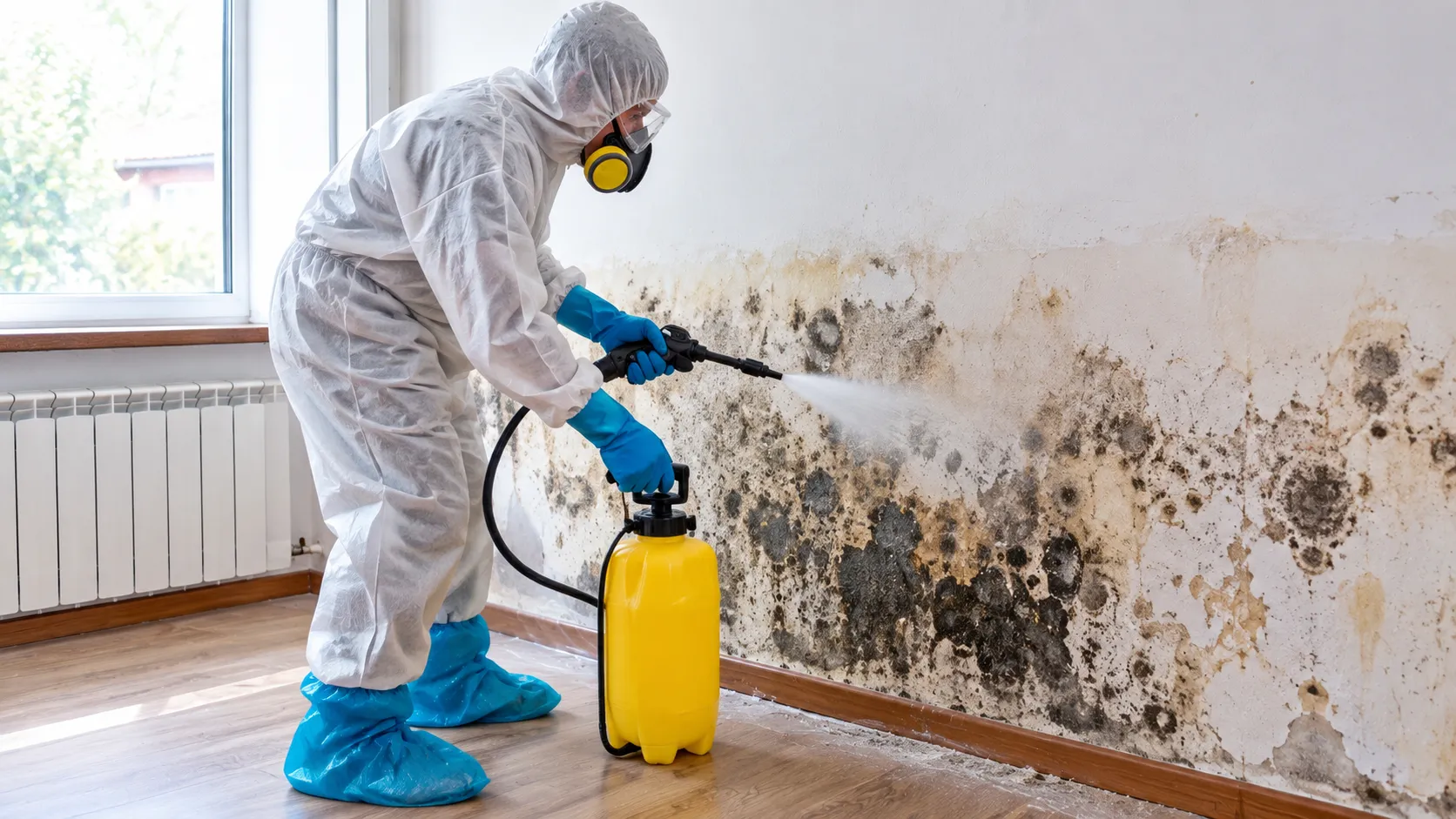
Mold removal is not the same as spraying bleach on a wall and hoping for the best. It's a controlled process that stops mold from spreading while it's being taken out, and it follows the ANSI/IICRC S520 Standard for Professional Mold Remediation, the industry rulebook that every certified technician trains to.
Here's what actually happens when we remove mold from a Charleston property:
- Containment first.We seal off the work area with plastic sheeting and negative air pressure. This keeps spores from drifting into the rest of your home while we work.
- Air filtration during the job.HEPA air scrubbers pull mold spores out of the air as we go, not just after we're done.
- Physical removal of contaminated material.Porous materials that have absorbed mold, like drywall, carpet padding, and insulation, get bagged and hauled out. They can't be fully cleaned, only replaced.
- Cleaning of non-porous surfaces.Hard surfaces like framing, subfloors, and tile get scrubbed with EPA-registered antimicrobial products, not just wiped down.
- A final clearance check.Before we call the job done, we confirm the air and surfaces are clean, so you're not left wondering.
The U.S. Environmental Protection Agency notes that mold can begin growing within 24 to 48 hours once a surface stays wet, which is exactly why Charleston's rainy season turns small leaks into big problems so fast.
Residential Mold Removal
Your home isn't a job site. It's where your kids play, where you cook dinner, and where you're supposed to feel safe. We treat it that way.
For homeowners across the Lowcountry, mold removal usually starts in one of a few predictable spots: a bathroom that never quite dries out, an attic with a slow roof leak, or a crawl space that's been damp since the last storm. We've pulled mold out of historic single houses in the South of Broad neighborhood with original plaster walls, and out of newer builds in Summerville with vinyl siding and modern HVAC systems. The house is different every time. The moisture problem underneath it usually isn't.
What you get with residential removal:
- A full walkthrough of the affected area, not just the spot you called about
- Kid-safe and pet-safe treatment products, so your family isn't displaced longer than necessary
- Photo-documented reports for your insurance company
- A clear explanation, in plain language, of what caused the mold and how to stop it from coming back
- Scheduling that works around your family, not the other way around
If you're dealing with mold after a burst pipe, a leaking roof, or a washing machine overflow, the clock matters more than you think. The Federal Emergency Management Agency advises drying out wet materials within 24 to 48 hours specifically to avoid the mold problem turning into a bigger one.
Commercial Mold Removal
A mold problem in a business isn't just a health issue. It's a liability issue, a reputation issue, and a lost-revenue issue every single day the space stays closed.
We've handled mold removal in Charleston offices, retail spaces, restaurants, and multi-unit rental properties, and the priorities are always the same: get in fast, work around your operating hours when we can, and hand you documentation that satisfies your insurer, your landlord, or your health inspector without you having to chase us down for it.
Commercial mold removal from MRemovals includes:
- After-hours and weekend scheduling, so your business doesn't lose a full day of operations
- Compliance-ready reports built for landlords, insurance adjusters, and health inspections
- Coverage for offices, retail storefronts, restaurants, warehouses, and multifamily buildings
- Direct communication with property managers or ownership, not a call center reading a script
- Containment methods that let unaffected parts of the building stay open while we work the problem area
Restaurants and multifamily properties in particular deal with a version of this problem that homeowners don't: shared HVAC systems and shared walls mean mold in one unit can become mold in three units if it's not caught early. If you manage a multifamily building anywhere in Charleston County, Berkeley County, or Dorchester County, that's exactly the kind of job we handle.
Crawl Space Mold Removal
If your Charleston home sits on a pier foundation, and a lot of them do, your crawl space is probably the single biggest mold risk on the property, and it's the one homeowners check the least.
Crawl spaces trap ground moisture with almost no airflow. Add Charleston's humidity on top of that, and you get the ideal breeding ground for mold, sitting directly under your living room floor and often right next to your HVAC ductwork. That's how a crawl space problem turns into a "why does my whole house smell musty" problem. Cold air moving through moldy ductwork carries spores straight into the rooms you actually live in.
Signs your crawl space needs mold removal:
- A musty smell coming up through floor vents, especially when the AC kicks on
- Visible mold on floor joists, subfloor, or insulation
- Insulation that's sagging, wet, or falling down
- Standing water or damp dirt under the vapor barrier
- Wood floors upstairs that feel cool, damp, or slightly springy
We remove the affected insulation, treat the wood framing to stop active growth, and address the moisture source directly, because removing the mold without fixing the moisture just means we'll be back in a year.
Crawl Space Encapsulation
Removing mold from a crawl space fixes today's problem. Encapsulation is what keeps it from becoming next year's problem.
Encapsulation means sealing the crawl space with a heavy-duty vapor barrier across the ground and up the walls, closing off outside vents that let humid air in, and in many homes, adding a dehumidifier to keep relative humidity under control year-round. The EPA recommends keeping indoor humidity below 60 percent, ideally between 30 and 50 percent, and an encapsulated crawl space is one of the most effective ways to hit that number in a Charleston home.
Homeowners in West Ashley, James Island, and Johns Island ask about this the most, and it's usually because they've already paid for mold removal once and don't want to pay for it again. If that's you, encapsulation is worth asking about during your inspection, before mold has a chance to come back.
What Gets Removed vs. What Gets Treated
This is the question we get asked on almost every job, and most companies don't explain it clearly. Here's the simple version.
Materials we remove:
- Drywall with mold growth
- Carpet, carpet padding, and rugs
- Insulation (fiberglass or cellulose)
- Ceiling tiles
- Wallpaper
These are porous. Once mold gets inside them, it can't be fully cleaned out. Trying to save them usually just hides the problem instead of solving it.
Materials we treat and keep:
- Wood framing and subfloor
- Concrete and masonry
- Tile, metal, and glass
- HVAC ductwork (cleaned, not replaced, in most cases)
These are non-porous or semi-porous. HEPA vacuuming and EPA-registered antimicrobial treatment gets mold off these surfaces without tearing your home apart. A contractor who tells you every moldy surface needs to be torn out either doesn't know the difference or is padding the invoice.
Signs Your Property Needs Professional Mold Removal
A small spot on the bathroom grout is usually a cleaning job. Anything past that is usually a removal job. Here's where the line sits:
- Mold covering more than about 10 square feet (roughly a 3-foot by 3-foot patch)
- Mold that keeps coming back after you've cleaned it yourself
- Mold you can smell but can't find, meaning it's likely growing behind a wall or under flooring
- Mold following a flood, burst pipe, or roof leak that wasn't dried out within 48 hours
- Mold in your HVAC system or ductwork
- Health symptoms, like coughing or headaches, that ease up when you leave the house
The EPA and CDC both note that mold exposure can trigger allergic reactions, asthma symptoms, and irritation of the eyes, nose, throat, and skin, in both allergic and non-allergic people. If anyone in your home has asthma or a weakened immune system, don't wait on the 10-square-foot rule. Call us sooner.
Our Mold Removal Process
Every job starts the same way and ends the same way, no matter how big or small the mold problem is.
Inspection.
We check the affected area and everywhere mold likes to hide, using a moisture meter, not just a flashlight.
Containment.
Plastic sheeting and negative air pressure seal off the work zone before anything gets disturbed.
Removal.
Contaminated porous materials come out and get bagged on-site to keep spores from spreading through the house.
Treatment.
Remaining surfaces get HEPA-vacuumed and treated with EPA-registered antimicrobial products.
Clearance.
We confirm the area is clean before we consider the job finished, and we explain what caused the problem so it doesn't happen again.
Most residential jobs wrap up in one to three days. Crawl space and larger commercial jobs can run longer, depending on how far the mold has spread and whether encapsulation is part of the plan.
Mold Removal Cost in Charleston, SC
Mold removal cost depends on how much square footage is affected, whether porous materials need replacing, and whether the job includes crawl space work or encapsulation. Small bathroom or closet jobs run lower. Crawl space removal with encapsulation runs higher, since it includes materials like vapor barrier and a dehumidifier on top of the labor.
Every quote starts with a free, in-person inspection, so you know the real number for your property instead of guessing off a website estimate. For a full cost breakdown by job type, see our mold remediation cost guide.
Frequently Asked Questions
It depends on the material. Drywall, insulation, carpet, and other porous materials that have absorbed mold get removed and replaced, because they can't be fully cleaned. Non-porous surfaces like wood framing, concrete, and tile get treated and kept in place. We'll tell you which is which during the inspection, before any work starts.
For small spots under about 10 square feet on a hard, non-porous surface, careful DIY cleaning with soap and water can work. Anything larger, anything behind a wall, or anything following water damage should go to a professional. Disturbing mold without containment can spread spores through your entire HVAC system.
Removal is the physical act of taking out and treating mold. Remediation is the bigger picture: inspection, removal, and fixing the moisture source so mold doesn't return. Every removal job we do includes remediation steps, because pulling out moldy drywall without fixing the leak behind it is a temporary fix at best.
Most residential jobs take one to three days. Crawl space removal and encapsulation can take longer depending on square footage and how much moisture damage is present.
In most cases, yes. Containment keeps the work area sealed off from the rest of the house. For large jobs, especially ones involving a whole HVAC system, we'll tell you upfront if temporary relocation makes sense.
Not if the moisture source gets fixed. Mold removal without addressing the leak, humidity, or ventilation problem behind it almost always leads to a repeat visit. That's why every job ends with a conversation about prevention, not just a bill.
Yes. Homes downtown and around South of Broad often have original plaster and lath instead of drywall, which changes how removal has to be done. We use containment and treatment methods built for older construction so we're not tearing out material that doesn't need to come out.
We cover the greater Charleston area, including Downtown and the Historic District (29401, 29403), West Ashley (29407, 29414), James Island (29412), Mount Pleasant (29464, 29466), Daniel Island (29492), Johns Island (29455), North Charleston (29405, 29406, 29418), Folly Beach (29439), Sullivan's Island (29482), Summerville (29483, 29485, 29486), and Goose Creek (29445), along with the rest of Charleston, Berkeley, and Dorchester counties.