
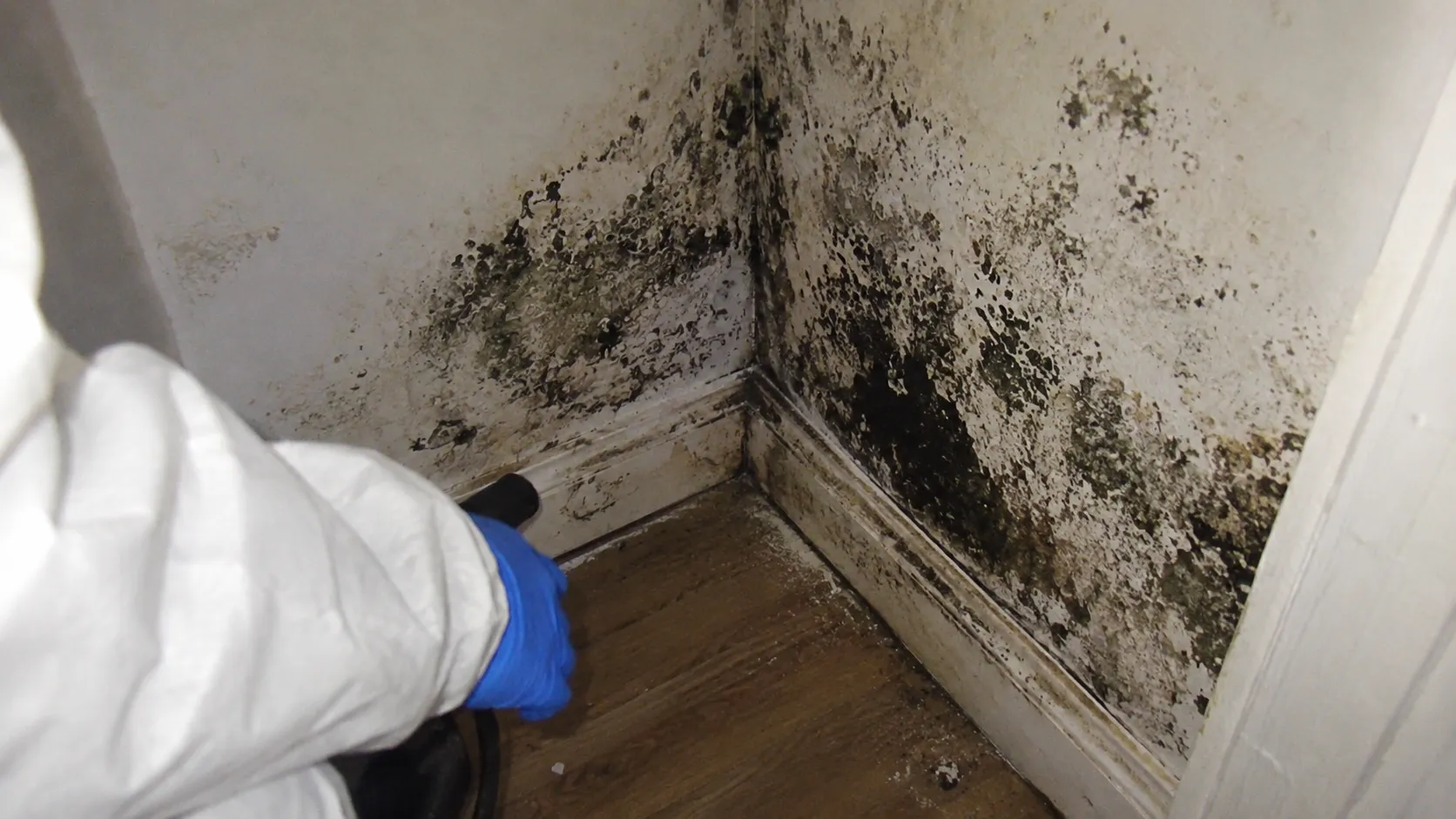
Finding a dark, slimy patch spreading across drywall or ceiling tile is unsettling, and the internet doesn't help. Search "black mold" and you'll find decades of horror stories calling it the "toxic mold" or "invisible killer." Before you panic, here's what you actually need to know, and what to do about it.
Call (843) 278-6142 for black mold removal, or fill out the form below and we'll follow up the same day.
What Is Black Mold, Really?
"Black mold" isn't one specific species, it's a common name people use for several dark-colored molds, most often Stachybotrys chartarum. It typically looks dark greenish-black, feels slimy when wet, and often comes with a strong musty odor. If its moisture source dries up, it can also turn dry and powdery. Like other molds, it needs sustained moisture to grow, which means finding it almost always points to a water problem somewhere nearby, a slow leak, chronic humidity, or past flood damage.
Is Black Mold More Dangerous Than Other Mold?
This is the question we get asked the most, and it deserves an honest answer instead of a scare tactic.
The CDC has stated plainly that mold color does not indicate how dangerous it is, and the agency doesn't recommend testing to identify a specific species before deciding on cleanup, because all mold should be treated as a potential health concern regardless of color or type. The "toxic black mold" reputation largely traces back to a 1990s CDC investigation into infant illness in Cleveland that was initially linked to Stachybotrys exposure. That specific link was never confirmed and has since been walked back by the agency, but the fear it created stuck around in pop culture for decades.
None of that means black mold is harmless. Like any mold, it can trigger allergic reactions, respiratory irritation, and worse symptoms in people with asthma, weakened immune systems, or mold sensitivities. The honest takeaway is this: any mold growth in your home is worth taking seriously and removing properly, and the color on the wall shouldn't be what determines whether you act.
Signs You May Have Black Mold
- Dark greenish-black patches, often slimy when wet or powdery when dry
- A strong, persistent musty odor in one area of the home
- Recent or ongoing water damage nearby, a slow leak, a damp crawl space, or past flooding
- Growth concentrated around window frames, bathroom tile grout, or water-stained drywall
- Health symptoms like coughing, skin irritation, or breathing difficulty that ease up when you leave the house
If you're seeing any of this, don't try to scrub it away yourself. Disturbing it without containment can release spores into the rest of your home.
Our Black Mold Removal Process
Because black mold often signals a more established moisture problem, we treat it with extra containment precautions on top of our standard process.
Inspection
We confirm the extent of growth and trace the moisture source causing it.
Containment
We seal off the area with negative air pressure, since disturbing black mold without containment is the fastest way to spread spores through the rest of the house.
Safe Removal
Affected materials are bagged and removed following IICRC S520 protocols, not just wiped down.
Disinfection
EPA-registered antimicrobial treatment on all remaining surfaces.
Moisture Correction
We fix the underlying water issue so the same species doesn't just grow back in the same spot.
Black Mold Removal vs. General Mold Removal vs. Mold Testing
- Mold removal covers the physical removal process for any mold species, residential or commercial. Full details are on our mold removal page.
- Black mold removal, this page, follows the same core process with added containment precautions given the moisture severity that species like Stachybotrys usually signal.
- Mold testing confirms species through a lab sample if you want to know exactly what you're dealing with before removal. See our mold testing page.
You don't need a lab test to justify removing black mold. If it's visibly growing, it needs to come out regardless of species, the same way the CDC recommends for any household mold.
Where Black Mold Shows Up Most in Charleston Homes
Charleston's humidity and older housing stock create a lot of opportunities for chronic moisture, which is exactly what dark mold species need. We see it most often in:
- Crawl spaces with standing moisture or poor ventilation, especially under historic single houses
- Bathroom grout and window sills where condensation builds up
- Areas with past storm or hurricane water intrusion that never fully dried out
- Behind walls where a slow, unnoticed leak has been running for months
Areas We Serve for Black Mold Removal
We provide black mold removal throughout the Charleston area, including:
- Downtown Charleston and the Historic District (29401, 29403)
- West Ashley (29407, 29414)
- James Island (29412)
- Mount Pleasant (29464, 29466)
- Daniel Island (29492)
- Johns Island (29455)
- North Charleston (29405, 29406, 29418)
- Folly Beach (29439) and Sullivan's Island (29482)
- Summerville (29483, 29485, 29486)
- Goose Creek (29445)
Don't see your area listed? Call us anyway, we cover the greater Charleston metro.
Why Charleston Homeowners Trust Us for Black Mold Removal
- IICRC S520-trained technicians, following the same standard regardless of mold color or species
- Honest information, not scare tactics built around the "toxic mold" myth
- Full containment protocols to keep spores from spreading during removal
- Moisture-source correction included in every job, not just surface cleanup
- EPA-registered disinfection products, safe for families and pets once treatment is complete
- Free estimates with no pressure and no hidden fees
Frequently Asked Questions
Not necessarily. The CDC has stated that mold color doesn't determine how dangerous it is, and any mold growth should be treated as a health concern and removed, regardless of species.
Not usually. If mold is visibly growing, it should be removed regardless of what species it turns out to be. Testing is more useful when the source isn't visible yet.
Small surface areas on hard, non-porous surfaces can sometimes be handled with care, but larger areas or mold on porous materials like drywall should be handled professionally to avoid spreading spores through the home.
Like most household mold, it can begin colonizing within 24 to 48 hours once moisture is present, and it keeps spreading the longer the moisture source goes unaddressed.
Not if the moisture source gets fixed. That's why our process always includes correcting whatever caused the growth in the first place, not just removing what's visible.
No. That reputation traces back to a CDC investigation from the 1990s that never confirmed a direct link, and the agency has since walked it back. It's still worth removing properly, just not something to panic over.